
There is a particular kind of professional who has spent twenty years earning their credibility.
They have the case studies.
They have the scars.
They have seen what happens when corners get cut and when systems break down.
They have saved companies from the kind of failures that end up in front of regulators, or in the news.
And online, they are almost invisible.
When they do post, it reads like a policy document.
Dense.
Passive.
Written for compliance, not connection.
The language that made them indispensable inside their industry becomes a wall between them and the people who need to find them.
This is one of the stranger ironies of professional life in the internet age: the most credible people often sound the least like it.
Expertise Does Not Announce Itself
There is a common assumption that runs through most expert-class professionals.
It goes something like this: the work speaks for itself.
And in closed rooms, in boardrooms, audit meetings, courtrooms, clinical settings, it often does.
Your track record precedes you.
Your reputation circulates among people who understand the signals.
Online, none of that machinery works.
LinkedIn does not care how many years you have in the field.
A first-time consultant who posts twice a week with clarity and consistency will outperform a twenty-year veteran who posts twice a year in impenetrable technical language.
The algorithm rewards presence.
So does human attention.
The credentials do not travel.
The content has to do the work.
The Way Experts Write Is the Problem
Professionals in technical fields, food safety, law, compliance, healthcare, financial services, were trained to write with precision.
Every claim qualified.
Every statement defensible.
Every term of art used correctly.
That discipline produces excellent reports.
It produces poor LinkedIn posts.
Technical writing is built to withstand scrutiny.
Good content is built to create connection.
These are different goals, and the skills that serve one tend to undermine the other.
When a food safety professional writes “implementation of Hazard Analysis and Critical Control Points (HACCP) frameworks ensures systematic identification and control of biological, chemical, and physical hazards in food production environments”, they are being accurate.
They are also losing the room.
When they write “most food recalls are preventable. The failure point is almost always a gap between the written procedure and what actually happens on the floor”, now they have something.
Same knowledge.
Different translation.
What the Silence Costs
When credible professionals stay quiet online, the vacuum does not stay empty.
It fills with people who are louder, more comfortable with the medium, and often, though not always, less experienced.
Their content ranks.
Their names circulate.
Their inquiries grow.
The expert with twenty years of hard-won knowledge watches from the side as someone with a fraction of their experience builds a following and, with it, a business.
This is not a commentary on fairness.
It is an observation about how visibility functions now.
If the people who most need your expertise cannot find you, or cannot understand you once they do, your credibility stops at the boundary of your existing network.
That boundary shrinks over time.
The people who stayed visible expand.
The Gap Is Not What You Know
Every professional who has watched a less experienced competitor win clients they should have won has asked some version of the same question: what am I missing?
The answer is rarely knowledge.
It is almost never experience.
It is almost always communication.
Specifically, the ability to translate what you know into language that earns trust before the first meeting.
That translation is a craft of its own.
It requires understanding the audience well enough to know what they are afraid of, what they do not know they need, and what will make them feel like someone finally gets it.
It requires a voice that carries authority without becoming clinical.
Most experts were never trained to do this.
They were trained to do the work, and do it well.
Expecting them to also be compelling communicators is like expecting a structural engineer to write the marketing copy for the building they designed.
The engineering and the storytelling are separate disciplines.
What Changes When the Gap Closes
When credible professionals find a way to communicate their expertise clearly, consistently, in their own voice, something shifts.
The right clients start finding them.
Not just anyone looking for the cheapest option.
The clients who have a real problem, who understand the value of experience, and who are looking for someone they already trust before the first conversation.
That trust is built through content.
Through posts that demonstrate genuine understanding of the challenges their audience faces.
Through the kind of specificity that only comes from actually having done the work.
A ghostwriter who understands both the craft and the industry can close this gap.
Not by manufacturing a persona, or by making an expert sound like someone they are not, rather by taking what is already there and making it legible.
The expertise was never the problem. It was always the translation.
Dark Quill Agency ghostwrites LinkedIn content and email newsletters for founders, executives, and consultants in complex industries. If your credibility is not coming through in your content, let’s talk.
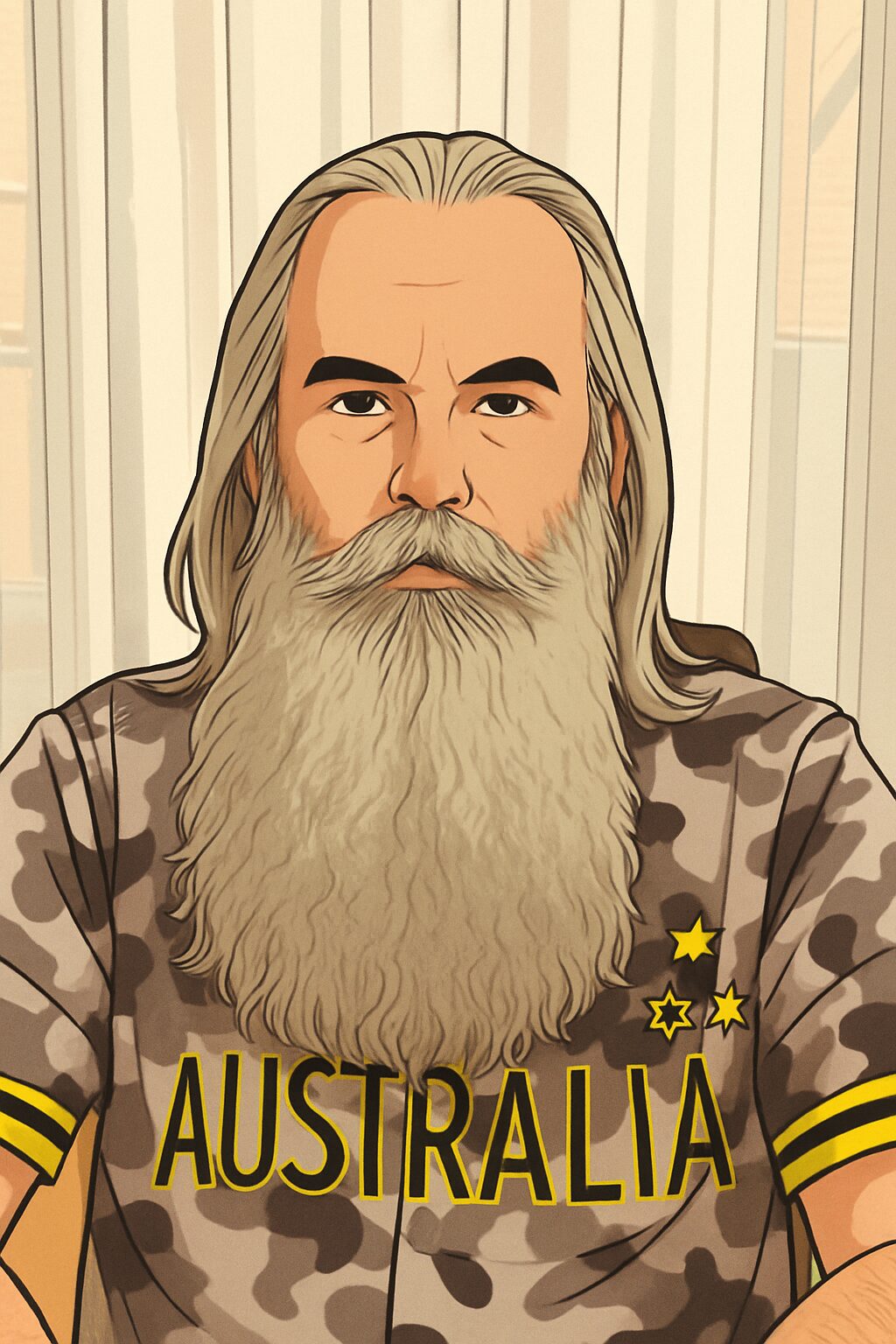
Cameron is a ghostwriter and content strategist with 7 years in food safety and 20+ years of writing online.
He helps founders and executives who want to build credibility on LinkedIn and in their audience’s inbox, without having to write it all themselves.
He runs Dark Quill Agency from Australia.