
I didn’t set out to become a ghostwriter.
Nobody does, I think.
The path is always more lateral than people expect.
Mine started behind the wheel of a truck, moved through industrial relations, then crossed into food safety, running parallel to twenty years of writing online before it landed here.
Running Dark Quill Agency.
Ghostwriting content for founders and executives who know what they want to say and don’t have the time to write it.
The route looks strange on paper.
In practice, every stage of it taught me something that made the work I do now sharper.
What Trucks Taught Me
Truck driving teaches you things that look nothing like communication skills and turn out to be central to them.
You learn to read people fast.
On the dock, in the traffic, across the CB radio, you develop a quick read of what someone actually means vs. what they’re saying.
Whether the operator telling you the load will be ready in twenty minutes means twenty minutes or three hours.
You learn to make decisions without full information.
You don’t stop and request a briefing document.
You assess what you know, account for what you don’t, and move.
You learn that precision matters.
A truck in the wrong lane is a serious problem.
A load that isn’t secured correctly is a dangerous one.
There’s no approximate in that environment.
What I didn’t realise until much later is that these are exactly the skills that make writing clear and useful instead of vague and careful.
Reading what people actually need.
Deciding what to say without paralysing over it.
Being precise.
The executives who communicate well tend to have these qualities too.
They learned them somewhere, often in the field, often in situations that looked nothing like “communication training.”
What Industrial Relations Taught Me
Industrial relations is the space between what the contract says and what people actually want.
You spend a lot of time in rooms where everyone has a stated position and a different underlying interest.
The visible disagreement is almost never the real disagreement.
Your job is to find the actual problem beneath the stated one and work toward something both parties can accept.
For writing, this translates directly.
When a client tells me their content isn’t landing, the stated problem is usually not the real one.
“My posts don’t get engagement” often means: I’m not saying anything specific enough to generate a reaction.
Or: my content sounds like it was written by a committee.
Or: I’m posting about what I do rather than about what my audience needs to understand.
The industrial relations habit of listening for the underlying problem, rather than taking the surface complaint at face value, shapes how I approach every client engagement.
What My Years in Food Safety Taught Me
Food safety is a discipline about the gap between what people know and what they do.
The science is well established.
The systems exist.
The standards are documented.
The persistent problem is that people don’t always apply what they know, for reasons that are human rather than technical, fatigue, pressure, competing priorities, the assumption that the bad outcome won’t happen today.
Communicating in that environment requires you to write for the practitioner in the moment, not the auditor reviewing the record.
Clarity matters.
Brevity matters.
If the guidance is long and complicated, it won’t be followed at the critical moment.
That’s the discipline I bring to writing now.
Every word I cut from a client’s content is a word their audience doesn’t have to process.
Every vague claim I tighten into a specific one reduces the chance their reader loses the thread.
What Twenty Years of Blogging Taught Me
I’ve been writing online since before most of my current clients’ LinkedIn profiles existed.
The early years were formative in the way that doing something without an audience forces you to develop actual craft instead of performing craft.
When no one’s reading, you either stop or you get better.
I got better.
I learned what holds a reader’s attention and what loses it.
I learned how to open a piece in a way that earns the next paragraph.
I learned how to end something so the reader walks away with something instead of just reading to a stop.
I also learned that consistency compounds.
A weekly post that runs for ten years is a different kind of asset to a viral post that gets forgotten in a week.
The professionals I’ve watched build enduring reputations online built them through consistency, not spikes.
Why the Path Matters
I’m not telling this story to be interesting. I’m telling it because the path is the argument.
The work I do for clients is built on this foundation. The ability to understand their industry fast. The habit of listening for the real problem. The discipline of writing precisely. The twenty-year craft investment that means I can produce good copy efficiently.
A ghostwriter who’s never been in a room where something actually mattered produces different work to one who has. The difference shows up in how they handle an uncomfortable topic, a technical concept, or a post that needs to do something harder than just sound professional.
If any of this resonates with where you’re at — and you’d like to see what this foundation looks like applied to your content — let’s have a conversation.
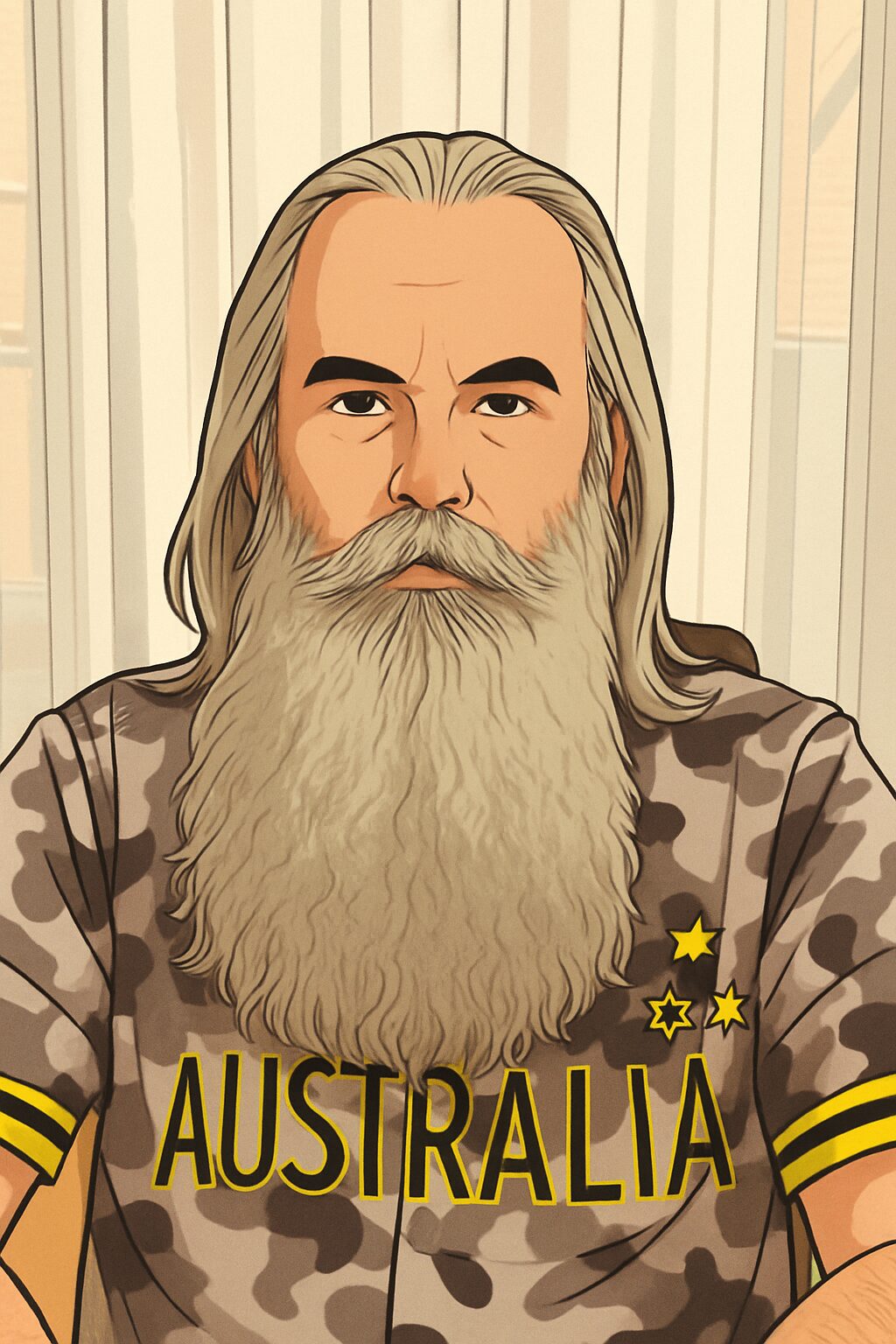
Cameron is a ghostwriter and content strategist with 7 years in food safety and 20+ years of writing online.
He helps founders and executives who want to build credibility on LinkedIn and in their audience’s inbox, without having to write it all themselves.
He runs Dark Quill Agency from Australia.